BP: Knowledge mobilized across silos to support success

BP (formerly British Petroleum) is one of the world's largest energy companies, with almost 100,000 employees. BP provides its customers with retail services as well as fuel for transportation, energy for heat and light, and petrochemical products for everyday items (BP 2009). For many years, Lord Browne – who joined the company in 1966 – was the CEO. He retired in 2007. Two of his areas of focus were knowledge management and green energy. This case study focuses on BP with Lord Browne as CEO.

Overview

BP has been a frequent winner of the international Most Admired Knowledge Enterprise (MAKE) award. For private sector firms, the MAKE award panel members consider the success of nominee’s work in: 

  • creating an enterprise knowledge driven culture;
  • developing knowledge workers through senior management leadership;
  • delivering knowledge-based products/services/solutions;
  • maximizing enterprise intellectual capital;
  • creating an environment for collaborative knowledge sharing;
  • creating a learning organization;
  • creating value based on customer knowledge; and
  • transforming enterprise knowledge into shareholder/stakeholder wealth.
Leadership and Strategy

One of the impressive aspects of BP is the degree to which it has integrated strategic work with knowledge, and has learned to work across organizational silos (i.e., distinct units within an organization) so that expertise is shared, efficiencies are magnified and innovation is enhanced. They work with a knowledge management model to create a “whole that is greater than the sum of the parts” (Collison and Parcell 2001, p. 37). 

Leadership: Lord Browne, CEO, clearly communicated the importance of knowledge and sharing knowledge for organizational learning and performance through strategic documents and conversations. He said, for example, “Anyone in the organisation who is not directly accountable for making a profit should be involved in creating and distributing knowledge that the company can use to make a profit.”

He also said, “Most activities or tasks are not onetime events. Our philosophy is fairly simple: Every time we do something again, we should do it better than the last time.”

The leadership of BP clearly communicated the value of knowledge sharing and generation – recognizing the importance of knowledge to the long-term competitiveness of the organization.

Strategy: Good strategy leads to a comprehensive suite of cultural shifts, human connections, processes, tools and measures. Knowledge and performance are linked: the strategy embeds improved knowledge work in business to effect positive outputs and outcomes for business priorities. The BP value proposition involved speeding up the sharing of know-how, efficiencies, adaptation for competitiveness and innovation. BP’s knowledge management professionals emphasize fast and easy collaboration across boundaries (Greenes 2003).
BP staff wanted to develop a model and ways of talking about knowledge management that both spanned the breadth of this integrative field and was simple enough to talk about easily. The result is shown in Exhibit 4.

They chose to use the term “knowledge management” despite its shortcomings because they considered it to be a comprehensive term that could encompass the development, acquisition, sharing and use of knowledge – as well as being one that would probably not be associated with any one specific unit such as the executive, human resources or information technology. 
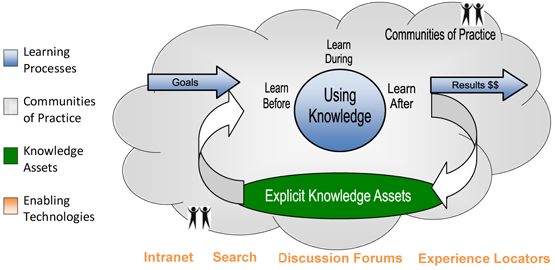
Exhibit 4: BP’s overall integrated approach to working with knowledge as an asset.                   

Source: Adapted with permission from a presentation by Greenes (2003)


The central concept is the effective use of knowledge to support business goals and improve business results. BP developed the “learning before, during and after” concept which many other organizations have adopted. In BP’s terms, a peer assist is a good tool for learning before; an action review helps learning during; and a retrospect supports learning after something is completed.

In some cases, it is appropriate to document and store information that emerges in these processes as explicit knowledge assets. Greenes (2003) suggests that most effort be invested in peer-to-peer and community connections. But he acknowledges that it is worthwhile to try to capture some critical knowledge or organizational doctrine. BP’s knowledge repository (which serves a different purpose than regular files for payroll or travel) is a very attractive database with innovators featured in photos, videos and stories. Users can click to read or see more, and they can contact an individual to learn more about how to improve their unit’s work by learning from the improvements.

Employees at BP connected with each other and the knowledge base through the intranet, discussion forums and expertise locators. Because BP’s many communities span organizational boundaries and connect different functions and geographic locations, they were viewed as the glue holding the people and processes together (Greenes 2003, pp. 32–33).

One of the biggest challenges for knowledge managers is to find successful ways of working with organizational silos, as important know-how is often trapped within work units. When a member of the public used the BP website to ask Lord Browne about how BP works with knowledge management, part of his reply addressed this challenge: “Our experience has shown that an organization based on a federation of self-standing business units is very good for delivering financial performance, but is not ideal for transferring know-how around the company” (as quoted in Collison and Parcell 2001 p. 45).

Exhibit 5 shows how knowledgeable, successful units in the organization are expected to bring other units up to their level, for the benefit of the whole organization and its customers. These achievements provided a new plateau from which performance can be further improved.
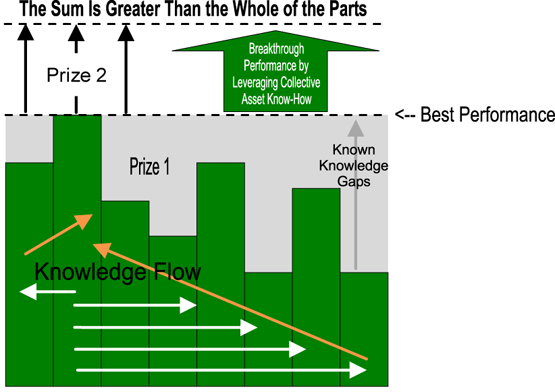
Exhibit 5: Fostering Knowledge Flow for Performance at BP 

Source: Adapted with permission from Greenes (2003)

 

Networks and Communities

Communities of practice (CoPs) are central to BP’s approaches. They span boundaries and are more agile than formal structures. Competencies grow in a CoP, as Exhibit 4 shows.

No traditional corporate structure, regardless of how decluttered and delayered, can muster up the speed, flexibility and focus that success today demands. Networks are faster, smarter and more flexible. (Charan 1991)

Far more organizational knowledge is in people’s heads than in documents, databases videos and files. As Collison and Parcell (2004, p. 138) explain: “Networks are the best way we have found to access, maintain and refresh knowledge. They are key in validating and distilling know-how in their practice area. Knowledge does not remain static. It’s not a case of storing a document on a shelf and leaving it to gather dust….Through sharing ideas, tips and hints, problems and solutions, they are able to access the knowledge of the whole community.”

BP is not unusual in that software designed to connect people includes both personal and professional information. Studies show that people are more inclined to develop relationships with, and trust in, others they have a sense of as “whole people.” And sometimes personal information uncovers interests and talents of value for projects or problem-solving.

Experiential Learning

Learning before, during and after was a central component of BP’s approach. This model has been used, for example, in several cases to improve refinery “turnarounds.” Examples cited by Greenes (2003):

Peer assist – learning before doing (facilitated meeting that can generate new knowledge):

We finished 9 days shorter than the previous one with 20 percent less cost and an extension of the turnaround interval from 4 to 4.5 years, with a $9 million savings.

- Nerefco Refinery Operations Manager

Action reviews – learning while doing (simple, low-cost, ongoing reviews):

Using “Action Reviews” for learning while doing, BP’s Toledo Refinery cut turnaround costs by $10 million.

- Toledo Refinery Manager

Retrospects – learning after doing (facilitated, future-oriented working sessions):

We have made a video recording to ensure that the impact of the words are captured in the corporate memory.

- Kwinana Refinery Turnaround Manager  

Knowledge base

Important patterns in learning from all refineries feed into the overall BP knowledge repository section on Refinery Turnarounds. This plain language repository is attractive and people-focused, and it includes stories and links to discussion forums, videos and critical facts and procedures. The designers wrestled with the level of detail. Albert Mehrabian’s research suggests that in any communication, about 7% of the message is in words, 38% in tone of voice and 55% in body language. This poses a challenge for communicating effectively through documents. BP’s repository balances storytelling with synthesis of key facts (Collison and Parcell 2004, p. 143). It became an important tool for generating, sharing and using knowledge. As Greenes (2003) says, “Look on a knowledge asset as a catalyst for finding the person who knows, an index, a memory aid, a repository of insights and experiences not found in manuals and as something to help you think about making your own decisions.”

Culture

Examples of perspective shifts from Toledo Refinery Action Reviews are plentiful where more than 50 action reviews were done and about 70 “lessons learned” were created. The refinery manager said there were about 40 contractors (union) involved in the reviews, or about 10% of the workforce, including boilermakers, welders and carpenters. Examples cited by Greenes (2003):

There are times when you think we don't have time to do this, then you do it and you think we don't have time not to do this.

- Foreman

Before [action reviews], we didn't feel like they were a team. After a few [reviews] we became one.

- Contractor

Groups of contractors offering opinions on equal terms - a unique experience.

- Kwinana Refinery Turnaround Manager